PEMF and The Lymphatic System
PEMF & The Lymphatic System
The lymphatic system plays a central role in immune function, tissue fluid balance, and recovery, yet it is often overlooked in clinical discussion.
Unlike the cardiovascular system, the lymphatic system has no intrinsic pump.
Lymphatic flow depends on physiological mechanisms such as:
• skeletal muscle contraction
• diaphragmatic breathing
• adequate microcirculation
• soft, non-constricted tissues
• parasympathetic (rest–repair) activity
When these mechanisms are reduced due to prolonged sitting, stress, decreased mobility, ageing, or post-injury tension, lymph transport becomes less efficient.
This is where low-frequency PEMF has a relevant physiological role.
 What Low-Frequency PEMF Supports
PEMF does not detoxify, drain, or “flush” the lymphatic system.
Instead, it supports biological conditions that make natural lymphatic flow easier. These mechanisms are well established in biophysics and microcirculation research.
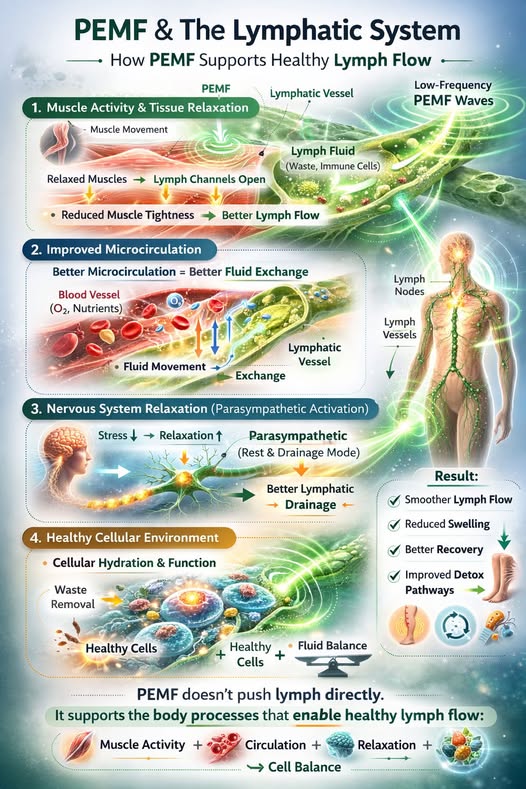
 Promotes Soft Tissue Relaxation
Low-frequency PEMF can help reduce muscle and fascial tension.
When tissues are more relaxed, lymphatic capillaries and channels experience less mechanical resistance, supporting smoother lymph movement.
 Enhances Microcirculation & Capillary Exchange
PEMF is known to influence vasomotion and microvascular perfusion, which supports:
• improved capillary blood flow
• better oxygen delivery
• more efficient fluid exchange between blood and tissues
Healthy microcirculation indirectly supports lymphatic function because lymph transport relies on hydrostatic and osmotic gradients.
 Encourages Parasympathetic Activation
The lymphatic system operates more effectively when the body shifts toward a parasympathetic state (relaxation, repair).
Low-frequency PEMF has been observed to support autonomic balance, helping the body enter a state where natural lymphatic processes function better.
 Supports Healthy Cellular Environment
Cellular membrane potential plays a role in ion balance and interstitial fluid regulation.
By supporting cellular homeostasis, PEMF helps reduce the likelihood of fluid stagnation around tissues.
 Why Patients Often Say They Feel “Lighter”
This sensation is not because PEMF removes toxins or forces lymph movement.
It arises because the underlying physiological conditions improve:
• less tissue tension
• better microcirculation
• calmer nervous system
• smoother fluid dynamics
This can particularly benefit:
• office workers with long hours of sitting
• individuals with stress-related muscle tightness
• older adults with reduced mobility
• travellers experiencing temporary swelling
• patients recovering from general fatigue
PEMF is not a treatment for lymphatic disorders, but it can support the environment that allows the body’s own lymphatic system to operate efficiently.
For more information:
Contact us anytime, we are just a Phone Call away to assist you!
Or simply just WhatsApp us now at +60166559494